Hussaini Umar
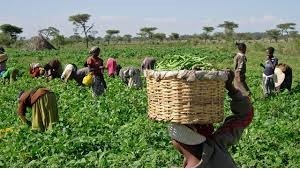

KANO, NIGERIA — Nigeria’s agricultural sector has officially entered “contraction territory,” according to the January 2026 Business Confidence Monitor (BCM) released by the Nigerian Economic Summit Group (NESG). The sector’s Business Performance Index (BPI) crashed from 112.9 points in December to 99.5 points in January—marking its worst performance in six months.
Under the NESG methodology, any index reading below 100 signifies a contraction. This shift suggests that the sector is no longer just “slowing down” but is actively shrinking.
The Data Deep Dive: A Tale of Two Sub-Sectors
The nosedive was not uniform across the board. While the overall economy showed resilience, agriculture joined the Trade sector as the only areas to contract this month.
- Livestock & Agro-Allied: These sub-sectors were the hardest hit, both falling to 97.9 points. This reversal is particularly alarming as it wipes out the brief recovery recorded during the 2025 festive season.
- The Energy-Input Trap: The BCM’s Cost-of-Doing-Business Index surged from 54.7 to 90.5 points in just 30 days. This reflects the brutal impact of fuel price adjustments and tax reforms on farmers who rely on energy for irrigation, processing, and transport.
- The Fishing Exception: The only “green shoot” in the data was the Fishing sub-sector, which stayed in expansion at 103.2 points, though its momentum is fading compared to previous quarters.
Why Agriculture is Losing the Confidence Race
The Future Business Expectation Index reveals a stark “Optimism Gap.” While Manufacturing (155 points) and Services (140 points) are looking forward to a strong 2026, Agriculture sits at a cautious 110.2 points.
The Disruptors:
- Security Gaps: Persistent insecurity in farming communities remains the primary deterrent for long-term investment.
- Infrastructure Voids: Unreliable electricity and poor rural roads are essentially “taxing” the profit margins of agro-allied businesses.
- Input Inflation: Input prices climbed to 96.9 points (up from 68.9), making basic fertilizers and seeds unaffordable for smallholder farmers.
The “Data Unveiled” Solution Angle
For a sector that employs the majority of Nigerians, a contraction is a national security risk. To move from crisis to recovery, analysts suggest three data-driven interventions:
- Digitizing Rural Security: Using tech-enabled monitoring to protect farming corridors.
- Input Subsidies: Immediate intervention in the cost of energy and fertilizers to lower the “Cost-of-Doing-Business” index.
- Credit Access: Bridging the financing gap that currently keeps the sector below the 100-point threshold.