Deconstructing Nigeria’s 4.43% GDP Jump and the Stabilization Claim
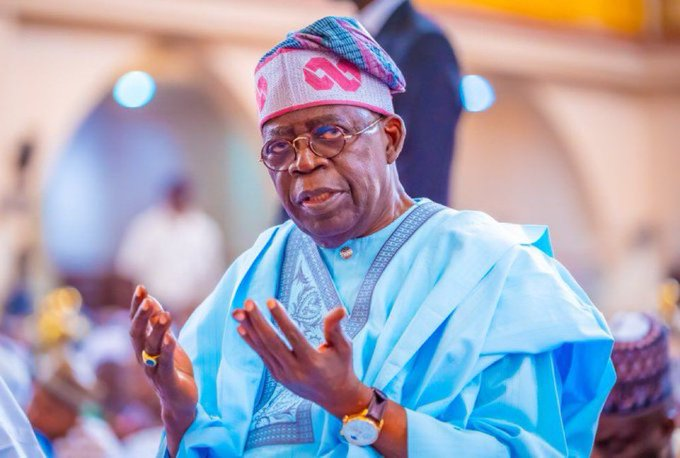
President Bola Ahmed Tinubu has hailed the latest Gross Domestic Product (GDP) report showing a 4.43% growth rate, declaring it a definitive sign that Nigeria’s economy is stabilizing after years of macroeconomic shocks. While the political celebration frames this as a triumph of current reforms, a data-driven review of the numbers reveals a more nuanced reality: the growth is real, but it is driven by specific sectoral recoveries and a gradual easing of inflationary pressures rather than a broad-based economic boom.
To understand whether the “stabilization” claim holds mathematical weight, we must strip back the headline 4.43% figure and examine the sectoral and historical data trails left by the National Bureau of Statistics (NBS).
The 4.43% expansion represents the highest year-on-year quarterly growth recorded in over three years, signaling a definitive upward trajectory away from the sluggish 2.5% – 3% band that characterized the immediate post-fuel subsidy removal era.
The Growth Trajectory: Escaping the Slump
Contextualizing the 4.43% requires a look at the historical data. Following the shock of the Naira devaluation and fuel subsidy removal in 2023, Nigeria’s GDP growth stuttered, hovering around 2.1% to 2.8% as inflation crushed consumer demand and manufacturing output.
However, by late 2025 and into Q2 2026, the data shows a sharp upward curve. This stabilization is largely attributed to the CBN’s success in tempering inflation, stabilizing the exchange rate, and clearing backlogs, which allowed businesses to plan and produce with greater certainty.
Hover over the area to view the exact quarterly growth rates leading up to the 4.43% jump.
The Inflation Convergence
Stabilization is mathematically impossible when GDP growth is lower than inflation. For years, Nigeria’s inflation (over 30%) dwarfed its GDP growth (under 3%). The 4.43% GDP growth, set against a declining inflation rate of 19.8% in Q2 2026, marks the first true convergence, meaning real purchasing power is finally beginning to recover.
The Sectoral Engines: Who Powered the 4.43%?
The 4.43% growth was not evenly spread across the economy. The data points to a massive contribution from the Services and ICT sectors, which have shown remarkable resilience to currency shocks. Financial institutions, bolstered by high interest margins and revalued FX portfolios, also contributed heavily to the growth index.
Conversely, the Agricultural sector grew, but at a much slower pace, constrained by lingering security issues and high input costs. The Oil sector, while improving, remained a drag on absolute growth figures due to production volatility.
To visualize how these sectors contributed to the aggregate 4.43% figure, the chart below maps the growth rate of the major economic pillars.
Hover over the bars to compare the growth rates of different sectors.
Oil vs. Non-Oil: The New Economic Paradigm
The data solidifies a structural transition in the Nigerian economy. For decades, GDP growth was a function of oil prices. Today, the Non-Oil sector is the undisputed engine of growth, contributing over 90% to the aggregate GDP output.
While the Oil sector continues to struggle to meet its OPEC production quotas, the Non-Oil sector—driven by trade, tech, and finance—has effectively absorbed the shock, pushing the national growth rate to 4.43% despite crude oil underperformance.
Hover over the doughnut to view the growth divergence between Oil and Non-Oil sectors.
The Outlook: From Stabilization to Expansion?
President Tinubu’s claim of stabilization is supported by the data. A 4.43% growth rate, especially when outpacing inflation, indicates that the economy has survived the worst of the reform shocks. However, stabilization is not the same as prosperity.
To transition from a stabilized economy to a booming one, the 4.43% growth must be sustained for several more quarters. Furthermore, the data demands that the growth must broaden to include Agriculture and Manufacturing, ensuring that the 4.43% is not just a statistical win for the financial class, but a tangible recovery felt in the purchasing power of the average Nigerian.