By Hussaini Umar
Nigeria’s digital economy is growing at an unprecedented rate. From fintech innovations to online retail platforms, millions of citizens are leaving behind a trail of personal data every day. Yet, while the Nigeria Data Protection Commission (NDPC) has strengthened oversight mechanisms through the Nigeria Data Protection Act 2023, a large percentage of organizations remain non-compliant.
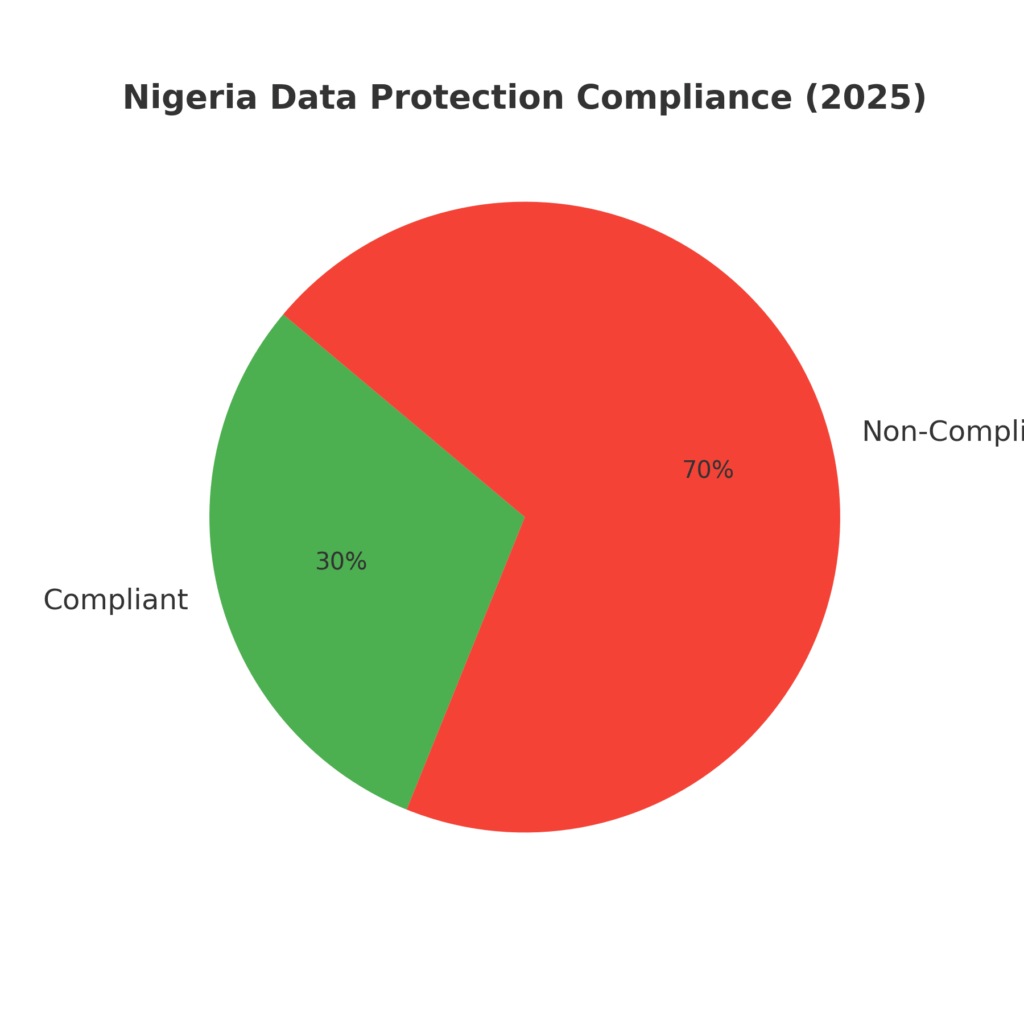
According to NDPC reports, less than 30% of data controllers and processors in key sectors have submitted compliance filings. This leaves consumer information vulnerable to breaches, unauthorized sharing, and even cross-border exploitation. For instance, financial institutions and health facilities—two of the most data-sensitive sectors—have been flagged for failing to meet minimum protection standards.
Data Unveiled’s analysis of compliance patterns shows three major trends:
- Small and medium enterprises (SMEs) lack awareness or resources to invest in compliance.
- Government MDAs (ministries, departments, and agencies) often ignore deadlines, citing bureaucracy.
- Multinational companies, while more compliant, sometimes exploit loopholes to transfer Nigerian data offshore
The consequences are not abstract. In 2024 alone, cybercrime complaints linked to weak data protection rose by 47%, according to EFCC. Victims often report identity theft, fraudulent bank withdrawals, and blackmail through leaked private information.
The NDPC has begun issuing fines, but experts argue enforcement remains weak. “Without consistent prosecution and public examples, compliance will remain optional for many organizations,” says Abuja-based tech lawyer, Maryam Usman.
For Nigeria to safeguard its digital economy, investment in public awareness campaigns, SME-friendly compliance tools, and stronger enforcement is urgent. Otherwise, the promise of digital transformation may collapse under the weight of insecurity and distrust.