Hussaini Umar
When Giants Disappear
The Lake Chad Crisis and Its Devastating Impact on Millions
A Vanishing Giant
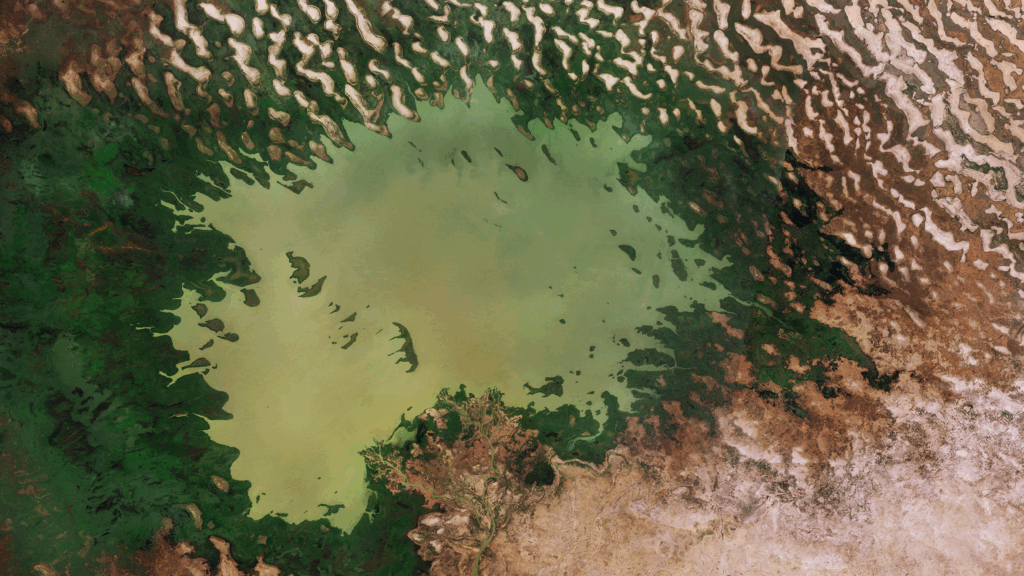
Imagine a body of water the size of Massachusetts simply disappearing before your eyes. This isn’t science fiction—it’s the reality of Lake Chad, once the 11th largest lake in the world.
Between 1963 and 1990, this massive lake lost 90% of its surface area, transforming from a vital water source supporting millions of people across four countries—Cameroon, Chad, Niger, and Nigeria—into fragmented pools of water.
The Dramatic Decline
The Beginning
Lake Chad begins its dramatic shrinkage due to reduced rainfall in Central African Republic, 800km away.
Halfway Lost
The lake has already lost about 50% of its original surface area.
Critical Point
75% of the original lake has disappeared, communities begin to feel severe impacts.
The New Reality
90% reduction complete. From 25,000 km² to just 2,500 km². A giant has become a shadow.
Lake Chad’s Shrinking Size Over Time
The circles above represent the relative size of Lake Chad at different time periods.
The Human Cost
The disappearing lake didn’t just change geography—it devastated communities. Areas near Lake Chad experienced dramatically slower population growth, with effects persisting decades after the initial shrinkage.
Population Growth Slowdown in Lake-Adjacent Areas
Rural communities, who relied heavily on the lake for fishing, farming, and herding, were hit hardest.
Economic Devastation
Despite land becoming available as waters receded, the economic impacts were overwhelmingly negative. The research reveals staggering welfare losses across the region.
Regional Welfare Loss
Average welfare decline across all affected areas around Lake Chad
Chad’s Welfare Loss
The country most dependent on Lake Chad suffered the greatest economic impact
Years of Impact
Effects persisted two decades after the shrinkage stabilized
Key Affected Sectors
- Fishing: Primary livelihood for thousands of families disappeared
- Farming: Irrigation systems and fertile lakeside land vanished
- Herding: Water sources for livestock drastically reduced
- Trade: Lake-based commerce and transportation routes disrupted
The Adaptation Challenge
Perhaps most concerning: despite decades passing since the initial crisis, communities show limited evidence of successful adaptation to these changed conditions.
This reality reflects a broader global pattern, with water deficits contributing to approximately 10% of global migration among over 1 billion migrants worldwide.
A Warning for the World
Lake Chad’s fate isn’t an isolated incident—it’s a preview of our water future.
Expected global water supply shortfall by 2030 with current practices
As climate change accelerates similar transformations worldwide, the lessons from Lake Chad highlight the urgent need for proactive policies and support mechanisms.