📈 Nigeria’s Economic Resilience: Non-Oil Sector Drives Q3 Growth Despite Headwinds
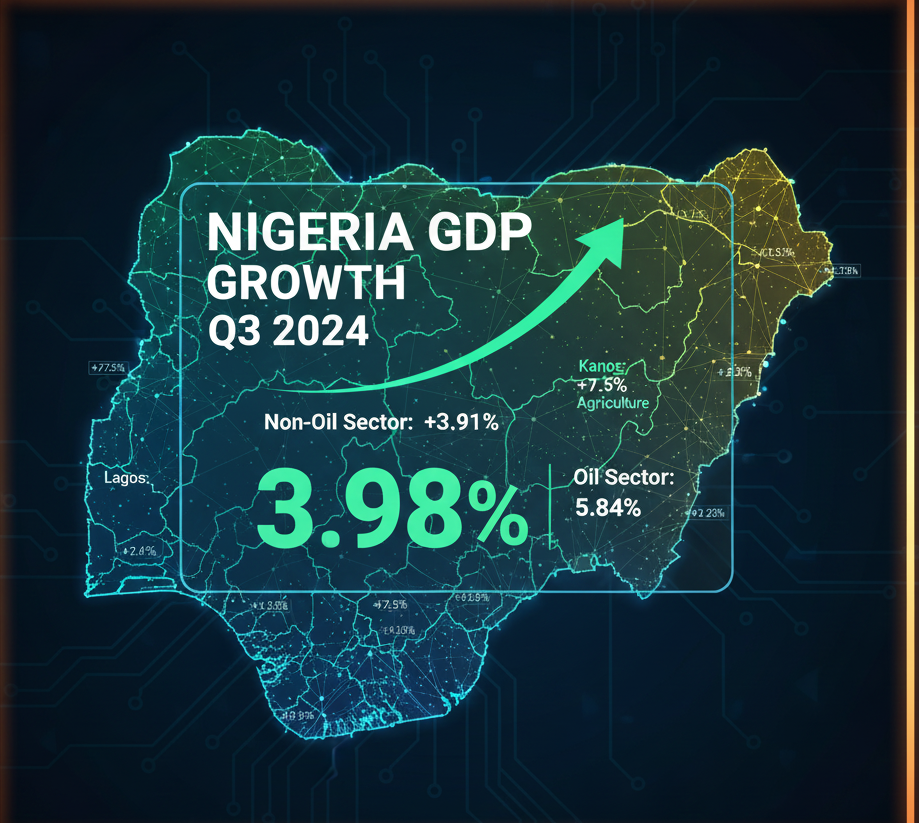
Nigeria’s economic expansion slowed marginally in the third quarter (Q3), with real GDP growing by 3.98% year-on-year. However, the latest data from the National Bureau of Statistics (NBS) confirms a crucial trend: the country’s economic stability is increasingly rooted in the non-oil sector, which continues to demonstrate resilience amidst high inflation and tight monetary policy.
Visual 1: Quarterly GDP Growth Trend
Overall economic growth saw a slight deceleration from 4.23% in Q2, but the non-oil sector’s consistent expansion highlights its role as the primary engine.
Visual 2: Sectoral Contribution to GDP (Q3 2024)
The non-oil sector contributed over 96% to the GDP in Q3, affirming its overwhelming importance. The chart below illustrates the dominance of the non-oil sectors, particularly Services.
Top Contributors to Q3 Non-Oil Growth:
- Services: Expanded by 4.15%.
- Agriculture: Grew by 3.77%.
Visual 3: Macroeconomic Headwinds: Inflation and MPR
The economy battles significant pressures. The high Monetary Policy Rate (27%) reflects the central bank’s fight against soaring inflation (16.05%).
The World Bank projects Nigeria’s GDP growth to reach 4.2% in 2025, supported by the non-oil industries.