Hussaini umar
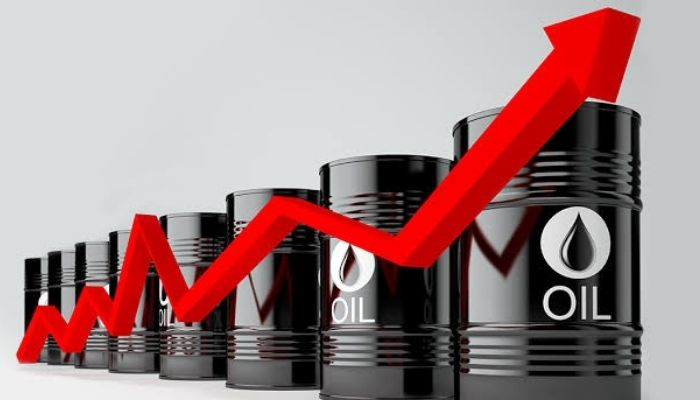
A wave of escalating attacks on energy transit routes in the Gulf has triggered a sharp upward trajectory in global crude oil prices, reversing weeks of market stability and threatening to disrupt global supply chains.
Market data tracked over the past 48 hours reveals a sudden price spike, driven by geopolitical tensions rather than fundamental supply-and-demand mechanics. As maritime security deteriorates, energy markets are pricing in a premium for risk, with both major global crude benchmarks reflecting the volatility.
The Numbers Behind the Price Spike
The immediate market reaction to the spread of attacks across vital Gulf energy routes was swift and severe. Data from global energy trading screens illustrate the scale of the jump:
- Brent Crude: The global benchmark surged by over 3.5%, trading above the $80 per barrel threshold, up from approximately $77.50 in the previous trading session.
- West Texas Intermediate (WTI): The U.S. benchmark mirrored the spike, climbing 3.8% to hover near $78.50 per barrel.
- Market Volatility: The spike represents the largest single-day percentage gain for crude oil in over a month, effectively wiping out the price dips recorded earlier in the quarter.
Supply Route Vulnerability: The Data Context
The price surge is directly correlated to the strategic importance of the maritime routes currently under threat. The Gulf serves as the world’s most critical artery for seaborne crude oil.
Data from global maritime tracking agencies highlight the volume of energy assets exposed to these disruptions:
- Transit Volume: Approximately 20% to 25% of the world’s daily global oil consumption passes through the Strait of Hormuz and adjacent Gulf waterways daily.
- Daily Barrel Count: This translates to roughly 20 million to 21 million barrels of crude oil and condensate moving through these routes every single day.
- Rerouting Impossibility: Unlike container shipping, which can be rerouted—albeit at a slower pace—around crisis zones like the Red Sea, crude oil tankers traversing the Gulf have limited alternative maritime infrastructure, making the routes virtually indispensable to global energy supply.
The Freight and Insurance Premium
Beyond the spot price of crude, the attacks are triggering a cascading financial effect across the maritime energy supply chain. Data indicates a sudden tightening in the shipping and insurance markets:
- War Risk Premiums: Maritime insurance underwriters have begun significantly hiking “war risk” premiums for vessels transiting the affected Gulf zones. Premiums for large crude carriers have surged by tens of thousands of dollars per voyage.
- Freight Rate Jumps: Daily charter rates for Very Large Crude Carriers (VLCCs) operating in the region are projecting an upward tick of 10% to 15% as shipowners demand higher compensation for operating in conflict-adjacent waters.
Economic Outlook: Inflationary Pressures Resume
For global economies, the data presents a concerning trend. A sustained breach of the $80-per-barrel mark directly translates to higher gasoline and diesel prices at the pump.
Economic modeling suggests that every sustained $10 increase in the price of a barrel of oil shaves roughly 0.2% to 0.3% off global GDP growth while adding a corresponding 0.2% to global inflation rates. Should the attacks continue to disrupt the 20 million daily barrels transiting the Gulf, energy analysts project Brent crude could test the $90 resistance level in the coming weeks, forcing central banks to reconsider their current monetary easing timelines.