By Hussaini Umar
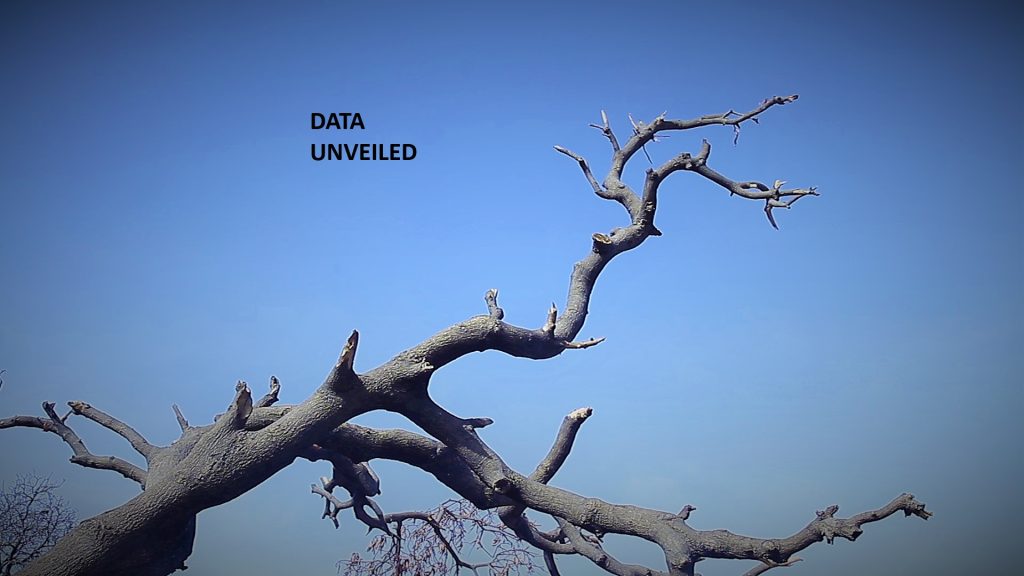
The first thing I noticed was the silence.
Years ago, the elders of Jigawa State described the Baturiya Wetlands as a place where the sky itself sang. During migration season, a living river of birds from Europe, Asia, and across Africa would descend upon the floodplains. Their calls were the heartbeat of one of Nigeria’s most vital ecosystems.
But when I arrived in this year 2026, that heartbeat had faltered. The air was still. The trees were fewer. Fresh stumps marked where canopies once sheltered thousands of migratory wings. The silence was no longer natural. It was a verdict.
What I uncovered was not merely an environmental crime. It was a story of impossible choices where greed, poverty, and fear have conspired to drive away the very creatures that once defined this land.
A Treasure We Forgot to Protect
Baturiya is not a household name inNorthern Nigeria most especially in Jigawa, yet it is an ecological giant. Part of the Hadejia-Nguru Wetlands system, it was designated a Ramsar Site in 2008 spanning over 101,000 hectares of floodplains, grasslands, and woodlands. It is a globally recognized Important Bird Area, hosting between 191 and 377 bird species and up to 325,000 waterbirds in peak seasons.
For more than 10,000 people in surrounding communities, the wetland is a lifeline: fish, grazing land, agriculture, and water. For birds traveling thousands of kilometers from Siberia or Scandinavia, it is a sanctuary, orr at least, it was.
Following the Sound of Chainsaws
As I moved deeper into the reserve, the evidence became a wound. Mature trees centuries old had been felled, split, and turned into charcoal. The forest was bleeding wood.
The cause was not malice. It was mathematics.
Nigeria’s economic collapse has left rural families with brutal arithmetic: one tree equals one meal. With no safety net, no alternative income, and no visible state presence, logging becomes not a crime but a currency.
For the logger, a stump is survival. For the bird, a stump is a grave.
Science confirms what my eyes saw: habitat loss, wood harvesting, and agricultural expansion are systematically dismantling the Hadejia-Nguru Wetlands. But data cannot capture the grief of a forest without a song. You have to walk through it. You have to listen to the absence.
When Journalism Itself Becomes the Prey
Environmental reporting is often dismissed as the quiet corner of journalism. In Baturiya, it became a confrontation.
As I documented the destruction, word spread. Men who had built their survival on charcoal began to circle. Their questions were sharp and raw: Why do you care more about birds than about our hungry children? Who gave you the right to take our trees?
I listened. I understood. Poverty is real. Hunger is real. But so is another truth: no forest, no birds. No birds, no wetland. No wetland, no future for anyone.
I explained that I was not there to take. I was there to understand. But understanding was not what they wanted.
A young man stepped forward, machete in hand, and shoved me aggressively. I lost my balance and nearly crashed to the ground. At that moment, it became clear that my presence was no longer welcome. His message was simple: Leave. Now.
For the first time in my career, the story I came to tell became secondary to my own survival. I left safely, but I have never truly left. That machete still hangs in my memory, not as a weapon but as a symptom.
The Real Enemy Has a Name
It would be easy to blame the villagers. It would be lazy journalism to paint them as vandals.
The real enemy is not a farmer with a saw. It is the absence of alternatives. It is the failure of the state to enforce environmental laws while also providing economic dignity. It is decades of neglect that have forced honest people into a destructive choice: feed your family today, or protect a future you may never see.
When desperation is the only currency, conservation becomes a luxury. And when conservation becomes a luxury, ecosystems die.
The tragedy of Baturiya is therefore not about disappearing birds. It is about a nation that has failed to reconcile the hunger of today with the heritage of tomorrow.
A Warning Carried on Empty Wings
Across Africa, wetlands are retreating crushed by climate change, population pressure, and the slow violence of indifference. Baturiya is a mirror.
Every tree cut is a brick removed from the foundation of survival. Every disturbed nest is a thread pulled from the fabric of migration. Every silent season is a warning we cannot afford to ignore.
Because wetlands do not only host birds. They hold back floods. They recharge groundwater. They feed families. They sustain life.
When a wetland falls silent, it is never just about wildlife. It is about us.
My journey into Baturiya in 2025 ended with more questions than answers.
How many trees have been lost in recent years?
How much habitat has disappeared?
What has happened to the migratory bird populations that once filled these skies?
Who is benefiting from the destruction?
And what can be done before it is too late?
These are the questions that continue to drive my investigation.
This article is only the beginning.
The story of Baturiya Wetland is far from over.
In Part Two, I will return to the communities, forests, and wetlands to uncover the deeper forces shaping the future of one of Nigeria’s most important ecological treasures.
Until then, the silence over Baturiya remains a warning that we cannot afford to ignore.