By Hussaini Umar
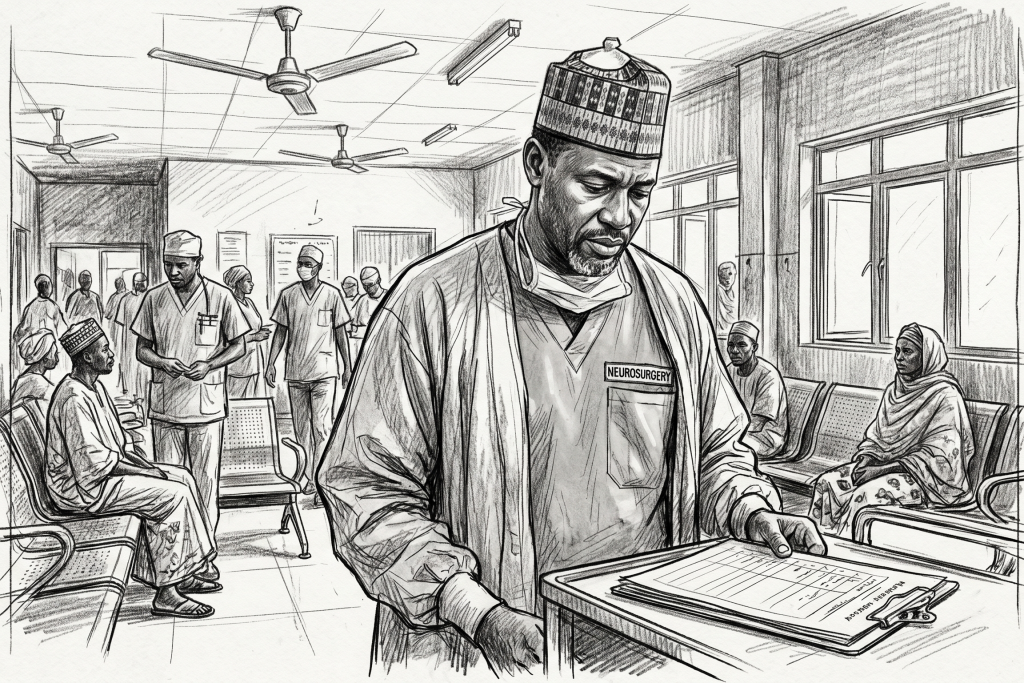
KANO, NIGERIA: Every Tuesday morning, the corridors of tertiary health institutions in Northern Nigeria tell a story of quiet desperation. Hundreds of elderly patients, many frail and leaning heavily on the arms of their adult children, line the wooden benches. They have traveled hundreds of kilometers from the arid landscapes of Jigawa, the rocky terrains of Katsina, and the conflict-weary communities of Zamfara. They are all chasing a single, elusive lifeline: an appointment with a neurologist or neurosurgeon.
But in this region, time is a luxury that neurological diseases do not afford.
A field investigation across four core frontline states in Northern Nigeria Kano, Jigawa, Katsina, and Zamfara uncovers a catastrophic reality. A critical shortage of neuroscientists (neurologists, neurosurgeons, and clinical neuroscientists) has choked the regional healthcare system. The fallout is grim: patients are routinely handed appointment dates stretching six to nine months into the future.
For the region’s elderly population, particularly vulnerable women over the age of 70 suffering from acute strokes, advanced dementia, and severe neurodegenerative disorders, these long wait times are a functional death sentence. A vast majority of them expire in their mud-walled homes long before their scheduled due date with a specialist.
The Grim Math of a Regional Crisis
The scale of this deficit is staggering when viewed through a data lens. According to medical experts, Nigeria as a whole possesses fewer than 100 practicing neurologists for a population exceeding 230 million people. This yields a national ratio of roughly one specialist to 2.3 million citizens. However, when the focus narrows to Northern Nigeria, the data plunges from inadequate to non-existent.
In states like Jigawa and Zamfara, there are periods where not a single resident neurologist is available at state-level tertiary centers, forcing reliance on visiting consultants or outright inter-state referrals. Medical professionals within the region report that a lone specialist is often left to cater to the burdens of three or more neighboring states.
This hyper-centralization turns premier institutions like the Aminu Kano Teaching Hospital (AKTH) in Kano into bottlenecks. Because primary healthcare centers across the North lack the diagnostic capabilities to handle disorders of the central nervous system, every case of progressive tremors, sudden paralysis, or cognitive decline is channeled upward.
📥 Patient Inflow from 4 high-pressure frontline states — Kano, Jigawa, Katsina, Zamfara.
Aminu Kano Teaching Hospital & Regional Tertiary Hubs — capacity saturated, specialist shortage, prolonged referral queuing.
🚨 High Outpatient Mortality: Frail & elderly patients expire before their scheduled due date — delayed care = silent emergency.
A 2026 study tracking specialist referral wait times in Nigerian tertiary centers revealed that neurological complaints exhibit some of the highest illness severity scores upon presentation, yet they face the longest administrative delays.
While international standards recommend that high-severity cases be evaluated within days, the median wait time in specialized clinics remains dangerously protracted. For an elderly stroke patient, where “time is brain,” a six-month delay is not healthcare administration it is systemic abandonment.
Gender, Age, and Geopolitics: The Perfect Vulnerability Storm
Why is this crisis disproportionately consuming older women over the age of 70? The intersection of biology, socio-economics, and regional cultural dynamics creates a perfect storm of vulnerability.
Biologically, women entering their seventh and eighth decades of life show higher global incidences of multi-infarct dementia, late-stage Alzheimer’s, and stroke complications. In Northern Nigeria, this biological risk is compounded by deep-seated socioeconomic systemic disadvantages.
Elderly women in rural communities rarely possess independent financial autonomy. They rely heavily on the pooled, often meager resources of extended family networks to fund trips to urban medical hubs. When a family is forced to choose between financing an immediate emergency or spending their last Naira on a multi-hour transport journey to Kano for an appointment that is months away, the elderly woman is frequently kept at home.
Furthermore, because early symptoms of neurodegenerative disorders—such as memory loss, erratic behavior, or motor instability—are poorly understood at the grassroots level, they are routinely misdiagnosed as generic “old age ailments” or spiritual afflictions.
By the time a family recognizes that a matriarch’s brain is failing and navigates the referral pipeline to a tertiary facility, the disease is advanced. To hand such a patient an appointment slip dated nine months later is to sign her death warrant. She returns to her village, out of sight of public health registries, and becomes an unrecorded casualty of the region’s medical brain drain.
The Ghost Ward: Brain Drain and Structural Neglect
The root of this systemic collapse is the aggressive hemorrhaging of Nigerian medical talent to the Global North—a phenomenon locally termed Japha. The Medical and Dental Council of Nigeria records that thousands of doctors have migrated to the United Kingdom, United States, Canada, and Saudi Arabia.
While the flight of general practitioners is widely reported, the exit of neuroscientists is an absolute crisis. Training a single neurologist or neurosurgeon takes between 13 to 14 years of intensive post-secondary education and residency. When one neurosurgeon leaves Kano or Katsina for a hospital in Birmingham or Texas, a pipeline that takes nearly a generation to build is severed instantly. The professionals left behind face crushing workloads, spending less than five minutes per patient due to overwhelming volumes, leading to rapid burnout and further migration.
The existing healthcare infrastructure is fundamentally unequipped to retain them. Neuro-diagnostic machinery, such as functional MRI scanners, CT imaging units, and electroencephalogram (EEG) kits, are frequently broken down or absent in Northern public hospitals. For a highly trained neuroscientist, practicing in an environment where they cannot image the brain they are trying to save is professionally paralyzing. They leave not just for better pay, but for the basic tools to do their jobs.
An Urgent Appeal for International Intervention
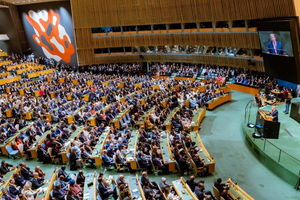
The structural deficits of Northern Nigeria’s healthcare budget cannot solve a crisis of this magnitude alone. The local ministries of health are consumed by the immediate fires of infectious diseases, malnutrition, and maternal mortality. The silent erosion of the region’s neurological health requires an immediate, sophisticated international intervention.
We are calling upon global health bodies—including the World Health Organization (WHO), the World Federation of Neurology (WFN), the African Academy of Neurology (AFAN), and international philanthropic heavyweights like the Bill & Melinda Gates Foundation—to step into this vacuum.
Northern Nigeria needs a dedicated, emergency intervention strategy built on three actionable pillars:
1. Decoupled Training and Remote Fellowship Pipelines
International bodies must fund localized, accelerated residency frameworks. Rather than pulling Northern doctors to Western capitals for fellowships (where they often remain), organizations like the European Academy of Neurology (EAN) and AFAN should scale up local “sandwich” programs. Specialists can be trained via hybrid digital curriculums, paired with short-term, intensive clinical rotations within Africa, ensuring they remain anchored to their home communities.
2. Digital Teleneurology Infrastructures for Frontline States
The international community should fund and deploy low-bandwidth teleneurology networks linking rural clinics in Zamfara, Katsina, and Jigawa directly to the few specialists in Kano or international volunteer networks. By utilizing mobile-friendly diagnostic apps and remote EEG monitoring, a local nurse can upload patient data, allowing a specialist to titrate stroke or epilepsy medications without requiring the elderly to travel or wait half a year for a physical consultation.
3. Targeted Endowment of Neuro-Diagnostic Equipment
nternational donors must shift from general healthcare funding to the specific endowment of solar-powered, ruggedized neuro-imaging infrastructure in Northern tertiary centers, tied to multi-year maintenance contracts managed by external third-party engineers. If you equip the hospitals, you retain the specialists.
Securing the Future by Protecting Our Past
A society’s moral fabric is measured by how it treats its most vulnerable. Right now, Northern Nigeria is failing its elders. The grandmothers who held our communities together, who preserved our history, and who guided our families are fading away in the dark, victims of a silent neurological famine.
The shortage of neuroscientists in Kano, Jigawa, Katsina, and Zamfara is an acute humanitarian emergency masquerading as a medical logistics issue. We cannot afford to watch a generation of elderly citizens die on waiting benches. The international community must look north, recognize the unique tragedy unfolding in our borders, and help us rebuild the defenses of the human mind before our remaining medical pillars crumble entirely.