Hussaini Umar
Nigerian scientists have called for the development of Artificial Intelligence systems tailored to African realities and for the Federal Government to establish clear regulations for the use of AI in biological and public health research.
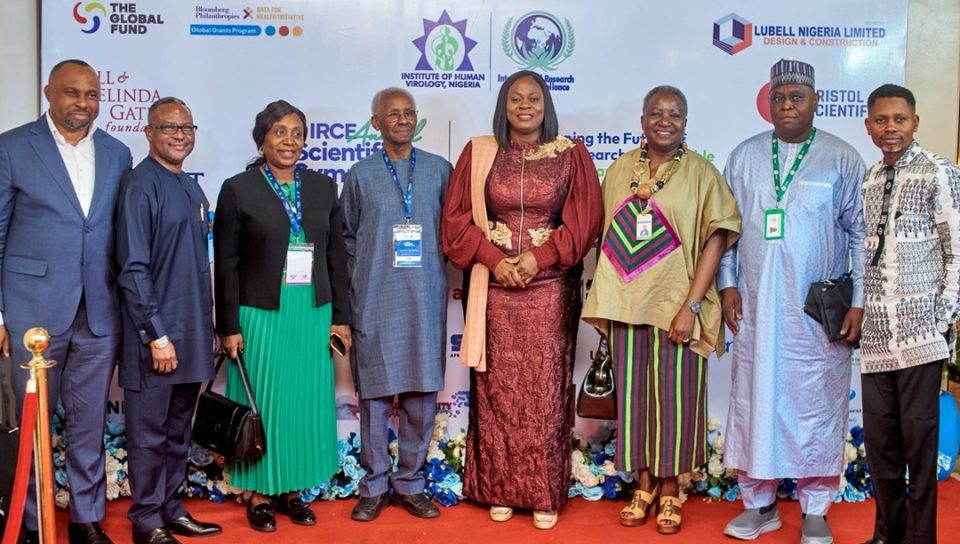
They made the call at the 4th Annual Scientific Symposium of the International Research Centre of Excellence (IRCE), Institute of Human Virology Nigeria (IHVN), where researchers examined the potential of AI to transform disease surveillance, research and health policy.
Renowned virologist and keynote speaker at the symposium, Prof. Oyewale Tomori, said Nigeria could significantly accelerate its response to public health challenges if it integrated AI into health planning and other sectors of the economy.
Tomori said AI could help researchers and policymakers analyse large volumes of information, identify patterns and make faster, evidence-based decisions.
He noted that government was already making efforts to address the country’s health challenges but could achieve better results by deploying AI more effectively.
“We are making efforts, but not as it should be. We could do faster with AI and turn this country around much faster than what we are doing.”
Tomori said the technology should not be limited to disease surveillance, stressing that it could also improve budgeting, agriculture, education, social planning and other areas that directly affect public health.
He explained that a better water supply, improved roads and other social interventions could reduce disease burden and improve access to healthcare, adding that AI could help the government understand the links between these issues and make better decisions.
Scientists demand African AI
Associate Professor of Infectious Disease and Genomics at Adeleke University, Dr Kolawole Oladipo, said Nigeria and other African countries should move beyond simply adopting AI technologies developed in other parts of the world.
Oladipo, who spoke on “Artificial Intelligence-Enhanced Whole Genome Sequencing for Disease Surveillance,” advocated the development of AI systems trained on African datasets and coordinated by African researchers.
He said this would ensure that the outputs generated by such systems were better suited to the realities and needs of African populations.
“We need African AI that is developed using African datasets and coordinated by Africans, so that most of the results we are having from that AI will be tailored to the usage of the African population.”
Oladipo also warned that the use of AI in biological research could pose serious risks without adequate oversight and called for a national policy framework to regulate the application of AI in biological research.
“There should be a policy framework at the national level to ensure that when you are doing that work, you are being regulated.”
He stressed that regulation was necessary to ensure that AI was deployed for legitimate scientific purposes without compromising public safety.
Research funding, data protection
Earlier, the Executive Director of IRCE, Prof. Alash’le Abimiku, said the symposium was against the backdrop of declining research funding and the rapid emergence of AI and machine learning.
She urged researchers to explore how new technologies could be used to improve productivity while establishing ethical safeguards around data sharing and privacy.
Abimiku also advised the government to develop policies that would protect national data and ensure that the country’s scientific resources were not compromised.
“What are the ethics and the guardrails that we need to have in place to be able to do that? Not just the researchers, but also our government. What policies do we have about sharing data and all of that?”
NACA backs local evidence
The Director-General of the National Agency for the Control of AIDS (NACA), Dr Temitope Ilori, stressed the need to generate local evidence to guide health policies and interventions.
Ilori commended IRCE for promoting research and innovation, saying locally generated data was critical to designing interventions capable of reaching Nigeria’s most vulnerable populations.
According to her, NACA was advocating increased domestic investment in research and sustainable financing, as well as exploring the use of AI to strengthen data analysis and improve health services.
She said the lessons from the symposium could strengthen disease surveillance and support the development of targeted innovations to address Nigeria’s public health challenges.