By Hussaini Umar
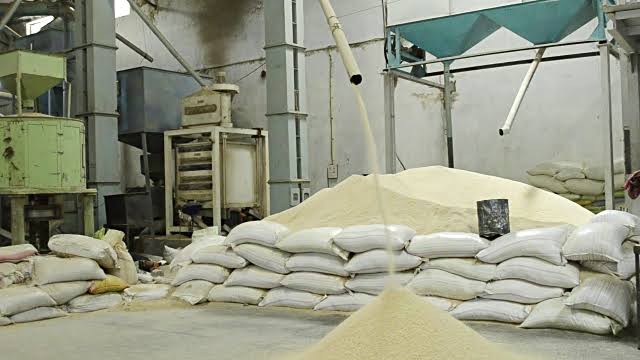
KANO, Nigeria — The commissioning of a 400-metric-tonne-per-day integrated rice mill and a sack manufacturing plant in Kano marks another milestone in Northern Nigeria’s growing agro-industrial transformation, reinforcing the state’s emergence as one of Nigeria’s leading rice processing and agricultural manufacturing hubs.
The facility, unveiled by a private agribusiness firm, combines rice processing with the local production of packaging materials—an approach that industry analysts say could strengthen domestic value chains, reduce production costs and create new employment opportunities.
The investment comes at a time when Nigeria is intensifying efforts to expand local food production, reduce dependence on imported agricultural products and increase value addition across the country’s agricultural sector.
Beyond Rice Processing
While the commissioning of a new rice mill represents increased processing capacity, the addition of a sack manufacturing plant highlights an equally important development.
Packaging remains one of the major cost components in food processing.
By manufacturing sacks locally, the company could reduce reliance on external suppliers, shorten supply chains and improve efficiency throughout the rice value chain.
Agricultural economists note that integrated facilities capable of processing, packaging and distributing products within one industrial ecosystem generally achieve higher productivity and lower operating costs.
Kano’s Rice Economy Continues to Expand
Over the past decade, Kano has steadily evolved into one of Nigeria’s largest centres for rice processing.
The state hosts numerous integrated rice mills ranging from medium-scale processors to some of the country’s largest industrial facilities.
Earlier investments have included mills capable of processing between 400 and 750 metric tonnes of paddy rice per day, reflecting sustained private-sector confidence in Kano’s agricultural potential.
The growth has been supported by:
- Expanding rice cultivation in Kano and neighbouring states.
- Improved irrigation systems.
- Government policies encouraging local rice production.
- Rising domestic demand for locally processed rice.
- Increasing private investment in agro-processing.
Together, these factors have transformed Kano into an important manufacturing centre within Nigeria’s rice value chain.
Strengthening Value Addition
Experts say Nigeria’s long-term food security depends not only on producing more rice but also on expanding domestic processing capacity.
Integrated mills generate value beyond farming by supporting:
- Paddy aggregation.
- Processing.
- Packaging.
- Storage.
- Transportation.
- Marketing.
- Distribution.
Each stage creates additional employment opportunities while retaining more economic value within local communities.
The addition of a packaging plant further extends this value chain by supporting local manufacturing rather than importing packaging materials.
Employment and Rural Development
Large-scale agro-processing investments typically generate employment both directly and indirectly.
Beyond factory workers, such facilities stimulate demand for:
- Rice farmers.
- Transport operators.
- Warehouse managers.
- Equipment technicians.
- Packaging suppliers.
- Logistics companies.
- Input dealers.
- Retail distributors.
Development experts argue that strengthening agro-industrial value chains can increase rural incomes while reducing post-harvest losses and improving market access for farmers.
Supporting Food Security
Nigeria remains Africa’s largest rice market, with demand continuing to outpace domestic production in many years.
Expanding local milling capacity is viewed as an important strategy for reducing dependence on imported rice while improving food availability.
Modern integrated mills also produce higher-quality rice that can compete more effectively with imported brands through improved cleaning, grading and packaging.
Sustainability Will Matter
While industrial expansion brings economic benefits, experts stress that long-term success depends on maintaining environmental standards.
Recent regulatory actions against some rice processing facilities over environmental compliance have highlighted the importance of balancing industrial growth with sustainable production practices.
Environmental compliance, waste management and efficient resource use are increasingly becoming essential components of modern agro-processing industries.
Data Snapshot
| Indicator | Value |
|---|---|
| New rice mill capacity | 400 metric tonnes/day |
| Additional facility | Sack manufacturing plant |
| Sector | Agro-processing |
| Location | Kano State |
| Expected impact | Value addition, employment, improved food processing and supply chain efficiency |
Data Unveiled Analysis
The significance of this investment extends beyond rice milling.
It reflects a broader shift toward agro-industrialisation, where agricultural production is increasingly linked with manufacturing, packaging and logistics.
For Kano, which has long been a commercial gateway for Northern Nigeria, investments in integrated processing facilities strengthen the state’s position as a regional manufacturing hub while creating new opportunities for farmers, processors and transport businesses.
The real measure of success, however, will not simply be the plant’s production capacity. It will be its ability to increase local sourcing of paddy, generate sustainable employment, support smallholder farmers and improve the competitiveness of Nigerian rice in domestic and regional markets.
If replicated across other agricultural value chains, integrated investments of this nature could play an important role in accelerating Nigeria’s transition from exporting raw agricultural commodities to producing higher-value food products.
This story was adapted and expanded by Data Unveiled from original reporting by Daily Trust, with additional context and development analysis.