Hussaini Umar
KADUNA, Nigeria — Kaduna State has received a donation of 5,000 tree seedlings to strengthen its climate action programme, expand afforestation efforts and restore degraded landscapes as authorities intensify measures to address the growing impacts of climate change.
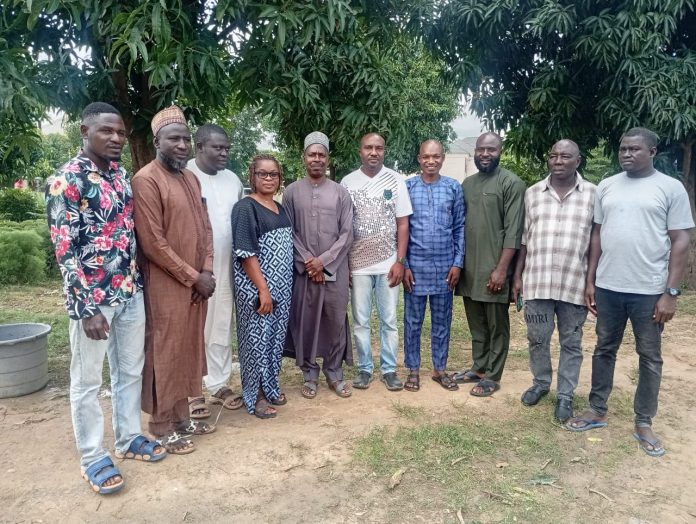
The seedlings were donated by the Kaduna State Horticulture Association to the Kaduna State Climate Change Accountability Mechanism (KADCCAM) following a strategic advocacy and partnership meeting held in Kaduna.
The donation includes both economic tree species, which can generate income and support livelihoods, and non-economic species intended to improve biodiversity, increase tree cover and enhance ecosystem restoration.
Building Climate Resilience Through Partnerships
Receiving the donation on behalf of KADCCAM, members of the delegation, Shehu Dalhat and Rev. Michael Ikpa, described the contribution as an important step toward strengthening Kaduna State’s response to climate change.
They said expanding tree planting initiatives remains one of the most effective nature-based solutions for combating environmental degradation, restoring degraded ecosystems and improving climate resilience across vulnerable communities.
The Chairman of the Kaduna State Horticulture Association, Bala Umar, reaffirmed the association’s commitment to supporting afforestation, sustainable agriculture and environmental protection through stronger collaboration with government institutions and civil society organisations.
According to him, partnerships between public institutions and private organisations are essential to addressing the increasing environmental challenges facing Kaduna State.
Why Tree Planting Matters
Northern Nigeria continues to experience increasing environmental pressures linked to climate change, including desertification, deforestation, land degradation and rising temperatures.
Trees play a critical role in addressing these challenges by:
- Absorbing carbon dioxide from the atmosphere.
- Reducing soil erosion.
- Improving soil fertility.
- Conserving biodiversity.
- Protecting watersheds.
- Providing shade and reducing urban heat.
- Supporting sustainable agriculture.
Environmental experts also note that economic tree species can improve household incomes through the production of fruits, timber and other marketable products while contributing to ecosystem restoration.
Youth Engagement Seen as Key to Long-Term Success
Also speaking, the Executive Director of Jobulb EduConsult, Joyce Adeji, called for broader public participation in climate governance.
She urged government agencies, schools, civil society organisations and community leaders to actively involve young people in climate action through environmental education and community initiatives.
Adeji proposed the establishment of Climate Clubs in schools and local communities to promote environmental awareness, encourage sustainable agricultural practices and prepare young people to become climate leaders.
She also stressed the importance of combining indigenous agricultural knowledge with modern scientific innovations to improve food security while strengthening climate resilience.
Part of Kaduna’s Wider Climate Agenda
The latest initiative aligns with Kaduna State’s broader environmental strategy, which includes land restoration, flood control, climate governance reforms and sustainable natural resource management.
Earlier this year, the state government announced plans under the Agro-Climatic Resilience in Semi-Arid Landscapes (ACReSAL) project to restore 22,435 hectares of degraded land, using geospatial technology to identify priority restoration areas.
Kaduna has also enacted a Climate Change Advisory Board Law to strengthen climate governance and recently awarded major contracts for flood and erosion control projects aimed at protecting vulnerable communities from climate-related disasters.
These initiatives reflect an integrated approach that combines afforestation, ecosystem restoration, climate policy and infrastructure investment to improve environmental sustainability.
Strengthening Accountability
KADCCAM also commended its leadership, particularly Civil Society Co-Chair Ibrahima Yakubu and Government Co-Chair Dr. Abubakar Buba, for advancing climate accountability and fostering partnerships that support environmental action in Kaduna State.
The organisation described the donation of the 5,000 seedlings as a significant milestone that will contribute to increasing tree cover, conserving biodiversity and mitigating the effects of climate change across the state.
Data Snapshot
| Indicator | Value |
|---|---|
| Tree seedlings donated | 5,000 |
| Restoration target under ACReSAL | 22,435 hectares |
| Seedling types | Economic and non-economic species |
| Lead climate platform | Kaduna State Climate Change Accountability Mechanism (KADCCAM) |
| Focus areas | Afforestation, biodiversity conservation, climate resilience and sustainable agriculture |
Data Unveiled Analysis
While planting 5,000 trees alone will not reverse decades of environmental degradation, the initiative represents an important building block in Kaduna State’s broader climate strategy. The long-term impact will depend on seedling survival rates, sustained community participation and continued investment in ecosystem restoration. When combined with land restoration programmes, climate governance reforms and public education, such partnerships can strengthen resilience against desertification, flooding and other climate-related risks affecting Northern Nigeria.