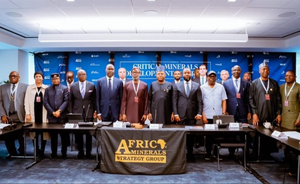
The Lithium Equation Powering Nasarawa’s Industrial Revival
Nasarawa State’s aggressive pivot to lithium mining is being framed as a local economic booster, but a structural review of global battery supply chains reveals a much larger macroeconomic play. By positioning itself at the front end of the green energy transition, Nasarawa is attempting to mathematically leapfrog from an agrarian economy to a critical node in the multi-billion-dollar global electric vehicle (EV) matrix.
However, the data exposes a critical fault line: extracting raw lithium is a low-margin game. The true industrial revival depends on the state’s ability to force the mathematical shift from raw ore export to domestic processing.
Global Demand Surge vs. Local Resource Deposit
The economic rationale behind Nasarawa’s lithium bet is anchored in global commodity data. As the world races to electrify transportation, the demand for lithium-ion batteries has created a supply squeeze. Nasarawa sits on some of the highest-grade lithium deposits in West Africa, with ore concentrations often exceeding 20%—a remarkably high yield that makes extraction mathematically viable even with infrastructural deficits.
Hover over the data points to view the widening metric gap in LCE (Lithium Carbonate Equivalent).
The FDI Multiplier: Capitalizing the Drill
To unlock the soil’s value, Nasarawa has had to engineer a massive Foreign Direct Investment (FDI) multiplier. The state has successfully attracted hundreds of millions of dollars from Chinese mining conglomerates. The mathematical equation is simple: the state provides the geological data and mining licenses; the foreign entities provide the capital-intensive extraction technology.
But capital injection is only step one. The data shows that raw lithium mining creates a fraction of the jobs and fiscal revenue compared to processing. To capture maximum value, the state government is structuring agreements to mandate local processing plants before export is permitted.
The Value-Chain Math: Raw Export vs. Processing
The core of Nasarawa’s industrial revival strategy relies on altering the value-chain math. Exporting raw spodumene (lithium ore) captures roughly 5% of the battery supply chain’s total economic value. By building processing plants that convert the ore into battery-grade lithium carbonate, the state mathematically retains up to 30% of the value locally.
This shift from extraction to processing is what transforms a mining camp into an industrial hub. It demands power infrastructure, logistics networks, and a technically skilled workforce—creating a multiplier effect that bleeds into the entire state economy.
Hover over the bars to compare the percentage of economic value retained locally.
Job Creation Matrix: Picks & Shovels vs. Lab Coats
From a demographic perspective, the industrial revival is measured in employment metrics. Raw lithium mining is heavily mechanized, yielding a low jobs-per-ton ratio. However, downstream processing and eventual battery component manufacturing are labor-intensive and require higher skills.
By forcing processing plants to set up in zones like Endo and Uke, the data suggests Nasarawa could see a 400% increase in direct, high-paying industrial jobs compared to a pure raw-export model. This forces a corresponding mathematical investment in technical education by the state government to supply the human capital required to run the refineries.
Hover over the stacks to view the job distribution across skill levels.
The Outlook: Closing the Infrastructure Deficit
While the geological and commodity math heavily favors Nasarawa, the infrastructural equation remains a massive deficit. Processing lithium is energy-intensive. Without a stable, high-capacity power grid, the foreign investors will be forced to build their own captive power plants, which slashes the overall ROI of the project.
For Nasarawa to truly claim its industrial revival, the state’s data trackers must ensure that the lithium boom does not become a repeat of the Niger Delta oil curse—where wealth is extracted, but the local economic math remains depressed. If the processing plants come online as projected, Nasarawa will mathematically reposition itself from a solid mineral backwater to the energy capital of West Africa’s green future.