Hussaini Umar

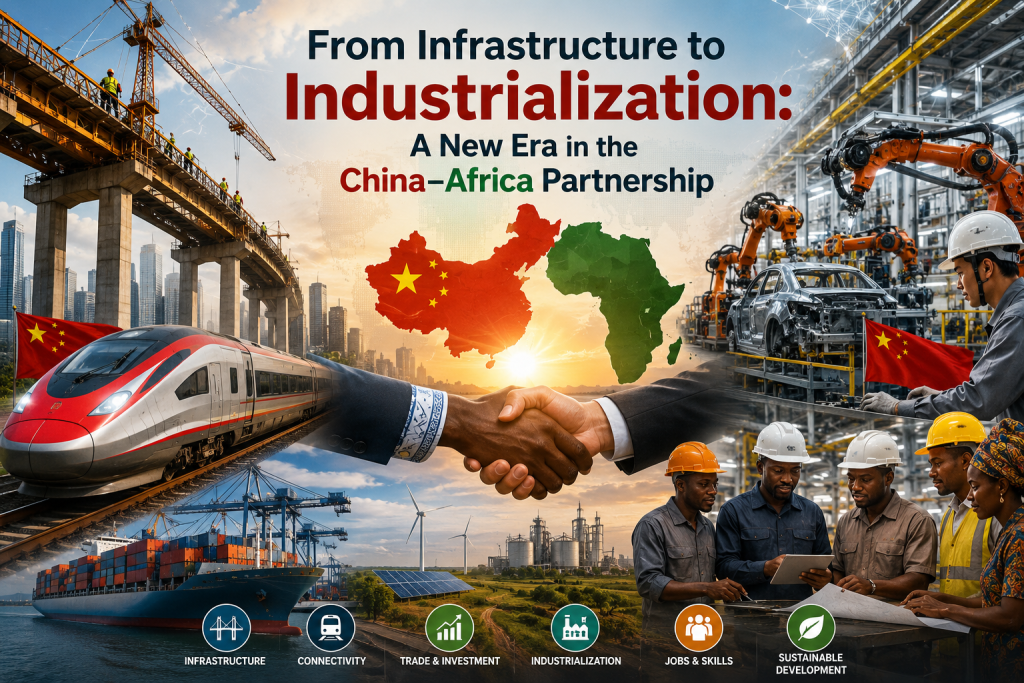
The economic architecture binding China and Africa is undergoing a metamorphosis. For years, the narrative was dominated by “roads and rails” massive, loan-financed infrastructure projects that connected mines to ports. Today, as 2026 unfolds, the conversation has pivoted toward “factories and value chains.” With the African Continental Free Trade Area (AfCFTA) now moving into full gear, both African governments and Chinese investors are recalibrating their strategies to move beyond mere extraction.
The New Industrial Mandate
The shift is not just rhetorical; it is structural. At the heart of this change is the aspiration of African nations to stop exporting raw commodities and start exporting finished goods.
“African governments are resisting the old extractive model that exports raw materials and imports manufactured goods,” notes an expert briefing from the Africa Center for Strategic Studies. “Many governments are encouraging local manufacturing, assembly, technology transfer, and integration into global supply chains.”
This alignment is being tested by China’s aggressive new trade policies. As of May 1, 2026, China has implemented a zero-tariff policy for 100% of taxable goods from 53 African countries. While the policy is a massive opening, observers remain cautious about whether the continent has the industrial “muscle” to walk through that door.
The Reality Check: Can Africa Compete?
The optimism surrounding zero-tariff access often clashes with the harsh realities of the African business environment. For entrepreneurs, the bottleneck is rarely just the absence of a market it is the presence of internal structural barriers.
“The mindset of AfCFTA doesn’t work,” argues Dennis Juru, president of the International Cross Border Traders Association. “As cross-border traders, we know China moves our goods in a cheaper way than anyone else.” Juru’s perspective highlights a critical point: unless African industrial capacity improves, Chinese firms may continue to dominate even in an “open” market, as they possess the logistical and financial agility that many local firms still struggle to replicate.
In Nigeria, this struggle is particularly acute. Despite being a signatory to the AfCFTA, the country faces persistent hurdles that threaten to turn it into a mere consumer of foreign-made goods rather than a hub of production.
“AfCFTA aims to harmonise trade tariffs and reduce non-tariff barriers,” says Daniel Dickson-Okezie, an SME expert. “For Nigeria to align with these objectives, it must overhaul some of its processes and improve transparency. The reality is that Nigeria’s industrial sector is not sufficiently developed to meet the demands of an open continental market.”
Building the “Factory Floor”
The consensus among economists is that tariff-free access is a blunt instrument if unaccompanied by domestic reform. To truly capitalize on the China–Africa partnership, the focus must shift to the “factory floor” the nuts and bolts of industrialization.
“Strict quality standards, certification requirements, limited access to credit, and inadequate logistics infrastructure remain major obstacles preventing many businesses from fully benefiting from the new trade framework,” reports Business Africa. “Economists argue that tariff-free access alone is not enough. African countries must invest in value addition, industrial capacity, transportation networks, and financing mechanisms.”
Looking Toward 2036
As we look toward the next decade, the potential for a “co-production” model is high. If Nigeria and its neighbors can leverage Chinese investment in Special Economic Zones (SEZs) to develop local manufacturing, the AfCFTA could become the vehicle that carries African products to the world stage.
The partnership is changing because it has to. As the Africa-China Economic Bulletin for 2026 suggests, “Africa’s own priorities are shifting, moving away from the old aid-and-infrastructure model toward debt sustainability, industrialization, and value addition.” The next ten years will define whether this pivot is a genuine success story or a missed opportunity to build a self-sustaining industrial base.