AI & IMPACT by Hussaini Umar
Solution Journalism • Digital Sovereignty • Evidence-Driven Analysis
How China’s Open-Weights Boom Is Rewriting Nigeria’s National AI Blueprint
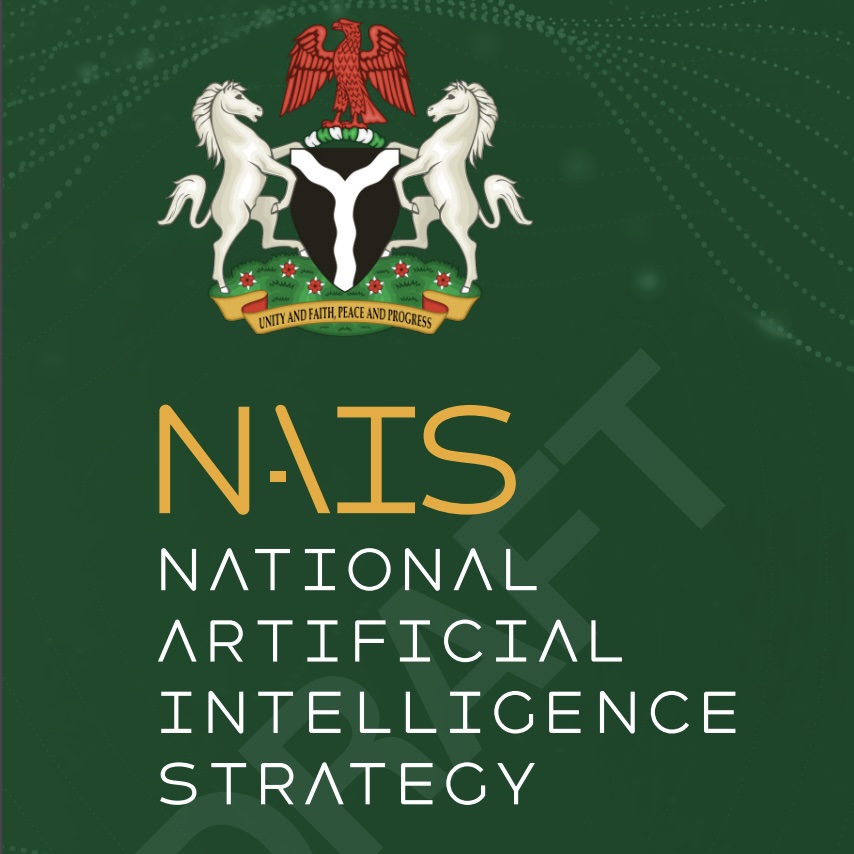
KANO, NIGERIA — When the Federal Ministry of Communications, Innovation and Digital Economy officially unveiled Nigeria’s National Artificial Intelligence Strategy (NAIS) in late 2024, it was hailed as a bold declaration of technological independence. The document laid out an ambitious roadmap to transform Nigeria into Africa’s leader in ethical, inclusive AI. Central to this vision was N-ATLAS — a homegrown, multi-lingual Large Language Model designed to natively understand local realities, languages, and public service needs.
Yet barely a year into implementation, the strategy confronts an unspoken, brutal mathematical truth. Nigeria’s public R&D investment remains stubbornly low, and erratic grid electricity—coupled with severe computing deficits—means local startups trying to build on NAIS found themselves trapped in an expensive economic chokehold: renting proprietary, closed-source models from Silicon Valley giants, paying in volatile, skyrocketing US dollars.
But thousands of miles east, a paradigm shift in mainland China has quietly thrown a lifeline to Nigeria’s digital architects. Rather than locking their frontier AI behind corporate paywalls, Chinese tech conglomerates and state-backed labs have aggressively weaponised an “open-weights” distribution strategy. By giving away the core neural weights of models like DeepSeek R1 and Alibaba’s Qwen 2.5, China inadvertently handed Nigeria the exact structural toolkit to bypass Western monopolies—and rescue its local AI strategy from financial collapse.
🌐 WESTERN PARADIGM: Closed-source “metered” AI
➜ Pay-per-token API (OpenAI, Anthropic).
➜ Billed in US Dollars → drains local startup capital.
🇨🇳 CHINESE PARADIGM: Open-weights “sovereign” AI
➜ Model code downloaded, run locally (DeepSeek, Qwen).
➜ Optimised multilingual tokenizers → slashes “Token Tax” by 85%.
🇳🇬 NIGERIAN INTERSECTION: Implementing NAIS & N-ATLAS
➜ Bypasses closed APIs, builds homegrown systems.
➜ Runs advanced AI on flat-rate regional servers — no dollar bleed.
The Token Tax & the Dollar Churn
To grasp why China’s trajectory matters for Nigeria, examine the operational bottlenecks of Nigeria’s digital ecosystem. Under NAIS’s core pillars—accelerating AI adoption in agriculture, healthcare, and public administration—the government intends to embed machine learning into regional health advisories and market-pricing indexes. That requires processing massive inputs of text and voice data in local dialects.
But when developers use closed Western APIs, they are penalised by two structural forces: The Naira-Dollar exchange rate and the multilingual Token Tax. Because Western LLMs are trained primarily on English-dominant datasets, morphologically rich languages like Hausa are severely fragmented during tokenisation. A simple five-word phrase in Hausa is chopped into 15–20 subword units, forcing a local innovator to pay triple the transaction fees of an English user—for the exact same message.
China’s Strategy: High Efficiency for the Global South
The global launch of Chinese open-weights architectures rewrote these economics overnight. Unlike Western models that rely on brute-force computational scaling (consuming massive electricity and parameters), Chinese labs focused on architectural efficiency and sparse Mixture-of-Experts (MoE) engineering. DeepSeek R1 activates only ~37 billion of its 671 billion parameters per query, dramatically lowering compute requirements.
More importantly, because Chinese developers designed these systems for complex multilingual trade environments, their tokenizers handle non-Western scripts with far greater efficiency. For Nigerian innovators, the structural advantage is revolutionary:
- Zero API tollgates: Download open-weights under MIT licenses, host AI on flat-rate local servers — bypass dollar-dominated utility models entirely.
- Local modification: N-ATLAS does not need to be built from scratch at billions of Naira. Engineers can fine-tune a Chinese base model with regional data for local needs.
| Parameter | Nigeria (NAIS Strategy) | China (CAC Regulatory Paradigm) |
|---|---|---|
| Governance Approach | Strategic vision; decentralised, sector-led oversight | Top-down mandatory algorithm registration & state audits |
| Data Framework | Relies on NDPA (general privacy law) | Strict technical mandates on data provenance & alignment |
| Resource Allocation | Developing implementation budgets, multi-stakeholder funding | Hyper-focused state financing for technological sovereignty |
The Policy Contrast: Abuja’s Ambition vs. Beijing’s Enforcement
While China’s technological output serves as an economic engine, a deeper governance gap emerges. Nigeria’s NAIS is explicitly a living vision centred on inclusion, social development, and alignment with the Nigeria Data Protection Act (NDPA). It sets high-level ethical goals: fairness, transparency, and privacy. However, policy analysts note an implementation gap. Nigeria excels at drafting comprehensive blueprints but lacks binding commitments, ring-fenced budgets, or specialised bodies to police automated systems. Oversight frameworks proposed to coordinate resource mobilisation remain stuck in bureaucratic channels.
Reclaiming the Strategy: A Roadmap for Digital Autonomy
If Nigeria’s National AI Strategy is to succeed, it cannot remain a passive consumer of open-source crumbs from China or a metered client of Silicon Valley clouds. The nation must aggressively pivot to exploit the open-weights wave for actual domestic data sovereignty.
- Deploy National Compute Clusters: Fund solar-powered, sovereign HPC centres inside Nigeria (as outlined in NAIS infrastructure arms). These hubs will host open-weights models locally, stopping raw data from crossing international borders.
- Institutionalise Open-Source Auditing: NITDA must develop technical guidelines to audit open-weights models before they enter public service pipelines — healthcare, agriculture, or public records — ensuring compliance with NDPA ethical mandates.
- Fund Local Fine-Tuning Labs: Instead of waiting for international grants to build models from scratch, incentivise Nigerian universities — BUK, ABU Zaria, UniIbadan — to run hyper-local data alignment campaigns, stripping foreign ideological biases from open models and replacing them with indigenous knowledge.
The global fragmentation of artificial intelligence has broken the absolute monopoly of Western big tech. For Nigeria, China’s aggressive open-weights strategy provides the code and mathematical efficiency to turn NAIS aspirations into physical reality. The tools are free to download. The remaining challenge is whether Nigeria can build the local infrastructure to house them securely — and govern them with Nigerian values.