Analysis by Faisal Usman Fagge
MAIDUGURI, Nigeria — For hundreds of internally displaced families living in the EYN unofficial Internally Displaced Persons (IDPs) camp in Maiduguri, farming was meant to be the pathway back to dignity after years of conflict.
Instead, it has become another chapter in a cycle of debt, loss and uncertainty.
An investigation by Data Unveiled, based on original field reporting by Daily Trust, reveals how many displaced farmers who borrowed money to cultivate rented farmland are now trapped in crippling debt after their crops were allegedly destroyed by armed herders, leaving families without income, food or any realistic means of repaying high-interest loans.
The crisis highlights a growing development challenge in Nigeria’s conflict-affected North-East, where access to affordable agricultural finance remains limited and thousands of displaced households continue to depend on risky informal credit arrangements to rebuild their livelihoods.
From Commercial Farmers to Displaced Survivors
Many residents of the EYN camp were once successful farmers cultivating large areas of land in communities across Gwoza Local Government Area before the Boko Haram insurgency forced them to flee more than a decade ago.
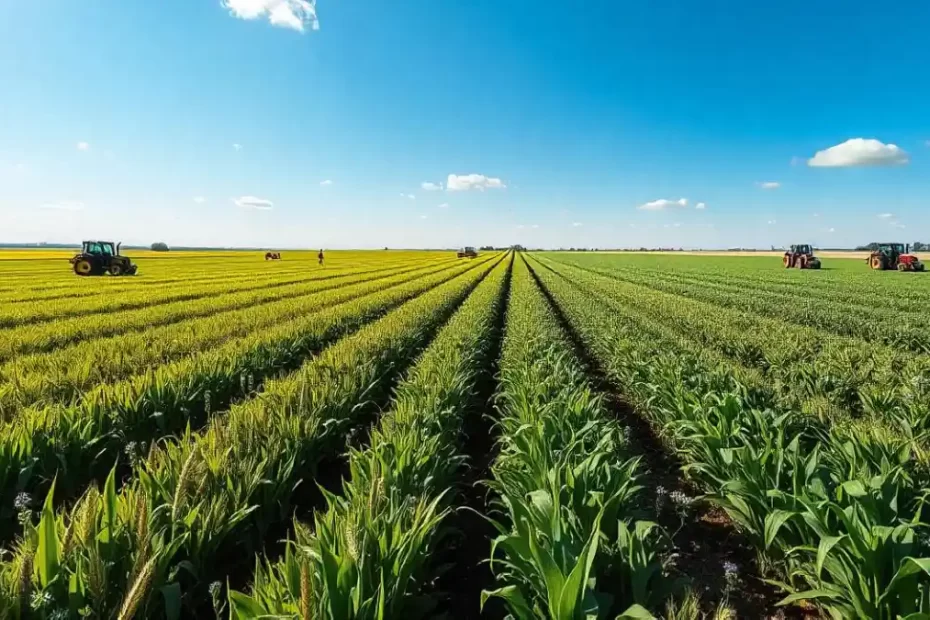
Today, instead of managing productive farms, many rent small plots of land around Maiduguri in an effort to feed their families and generate modest incomes.
With humanitarian food assistance declining in recent years, farming has become one of the few remaining survival strategies available to many displaced households.
However, without access to formal agricultural credit, many farmers turned to informal lenders charging extremely high interest rates.
Borrowing to Farm, Harvesting Debt
Several farmers interviewed described borrowing between ₦150,000 and ₦250,000, with repayment obligations rising to between ₦250,000 and ₦400,000 after harvest.
For families already living below the poverty line, the loans represented both an opportunity and a significant financial risk.
The borrowed funds were invested in land rental, seeds, fertiliser, labour and transportation.
Many expected a successful harvest that would allow them to repay the loans while retaining enough produce to support their households.
Those expectations never materialised.
According to residents, armed herders allegedly entered the farms before harvest, allowing cattle and other livestock to graze freely on cultivated fields.
Several farmers claimed the herders asserted ownership rights over the land, saying it had been purchased from Boko Haram insurgents.
Unable to resist because of security concerns, many watched helplessly as months of labour disappeared within hours.
When Crop Loss Becomes a Debt Crisis
For displaced farmers, losing a harvest means far more than losing crops.
It also means losing the ability to repay loans.
Residents say lenders began demanding repayment immediately after learning about the destruction of the farms.
Some borrowers alleged they were subjected to repeated harassment, including police involvement in debt recovery.
Community leaders say the pressure has contributed to severe emotional distress among affected families.
Some residents reported cases of hypertension, depression and stress-related illnesses.
Others described neighbours collapsing after witnessing the destruction of their farms.
While these accounts are based on testimonies from camp residents, they illustrate the profound psychological impact that financial insecurity can have on already vulnerable communities.
Women Bear a Double Burden
Women appear to be among the hardest hit.
Many borrowed money independently to support their households after years of displacement.
Instead of improving their livelihoods, they now face mounting debts alongside increasing responsibility for feeding their families.
Several women described watching livestock consume crops that represented months of labour and their children’s only hope for food.
For many households, the consequences extend beyond lost income.
Children remain out of school because parents cannot afford school-related expenses.
Household nutrition has deteriorated.
Health conditions linked to chronic stress are becoming increasingly common.
Shrinking Humanitarian Support
Residents also linked their worsening situation to reductions in humanitarian assistance.
According to camp members, declining food support from humanitarian organisations has forced many displaced households to rely more heavily on farming and informal borrowing.
Development experts have repeatedly warned that reductions in humanitarian assistance, when not accompanied by sustainable livelihood opportunities, can increase vulnerability among displaced populations.
For many families, agricultural production has become the primary strategy for rebuilding economic independence.
When farming fails, few alternatives remain.
A Wider Development Challenge
The situation facing displaced farmers in Borno reflects broader development concerns across conflict-affected regions.
Without affordable agricultural finance, insurance mechanisms or effective protection for cultivated farmland, vulnerable farmers often shoulder disproportionate financial risks.
Experts argue that strengthening rural livelihoods requires more than providing credit.
It also requires:
- Secure access to farmland.
- Affordable agricultural financing.
- Crop insurance mechanisms.
- Improved rural security.
- Effective conflict resolution between farming and pastoral communities.
- Access to extension services and markets.
Without these safeguards, borrowing intended to reduce poverty can instead deepen household vulnerability.
Data Snapshot
| Indicator | Findings |
|---|---|
| Years since displacement for many families | About 13 years |
| Typical informal loan obtained | ₦150,000–₦250,000 |
| Expected repayment after harvest | Up to ₦400,000 |
| Primary livelihood | Small-scale farming on rented land |
| Main reported challenge | Crop destruction and inability to repay loans |
Data Unveiled Analysis
The experience of these displaced farmers demonstrates that access to credit alone is not enough to rebuild livelihoods after conflict.
When farmers operate in insecure environments without insurance, legal protection or affordable financing, agricultural loans can quickly become debt traps rather than development tools.
As Nigeria seeks durable solutions for internally displaced communities, recovery efforts will need to move beyond humanitarian relief toward building resilient rural economies that combine secure land access, affordable agricultural finance, climate-smart farming practices and stronger protection for vulnerable producers.
Without these reforms, many displaced families risk remaining trapped between conflict, poverty and indebtedness long after the violence that uprooted them has subsided.
This story was adapted and expanded by Data Unveiled from original field reporting by Daily Trust, with additional development analysis and context.