How 2,500+ Child Casualties Forced UNICEF’s Ceasefire Ultimatum
UNICEF’s renewed demand for an immediate ceasefire is no longer just a diplomatic appeal; it is a desperate intervention triggered by a grim statistical threshold. As child casualties in Iran surpass 2,500, the data reveals a conflict where the most vulnerable are paying the highest mathematical price.
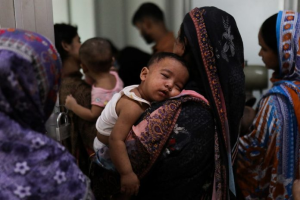
In modern warfare, collateral damage is often measured in infrastructure and economic loss. However, the demographic data emerging from the current conflict in Iran has forced global humanitarians to reframe the equation. The death and maiming of over 2,500 children represent not just a tragedy, but a systemic collapse of civilian protection protocols.
The Velocity of Loss
To understand the urgency of UNICEF’s call, one must analyze the velocity of the casualty rate. Historical conflict data shows that child casualties usually accumulate over years of protracted warfare. In this scenario, the 2,500 threshold was crossed in a matter of months, indicating an exponential rise in the intensity of hostilities in densely populated areas.
The data indicates a shift from targeted strikes to widespread area bombardment, where the mathematical probability of civilian—and specifically child—casualties skyrockets regardless of defensive precautions.
Hover over the area to view the rapid accumulation of casualties over time.
Beyond the Fatalities: The Demographic Shadow
While the 2,500 figure represents the ultimate loss of life, the broader humanitarian data paints a much darker picture of generational disruption. For every child killed, multiple others are injured, displaced, or orphaned.
UNICEF’s data models suggest that in conflicts of this intensity, the number of severe injuries to minors typically matches or exceeds the fatality rate. Furthermore, the destruction of schools and hospitals creates a compounding demographic deficit, stripping survivors of the foundational infrastructure required for human development.
Hover over the bars to compare the scale of secondary impacts.
“A ceasefire is not a political concession; it is a mathematical necessity to halt the exponential loss of a generation. The data proves that no civilian safe zone can withstand the current rate of escalation.”
The Infrastructure Deficit
The casualty numbers are directly correlated to the collapse of protective infrastructure. Data from the ground indicates that a significant percentage of child casualties occur when residential buildings and designated safe zones are compromised.
When the protective math of civilian infrastructure fails, the mortality rate among children—who are least able to flee or survive structural collapses—spikes disproportionately compared to the general population.
Hover over the doughnut to view where children are most vulnerable.
The Outlook: A Statistical Tipping Point
UNICEF’s ceasefire ultimatum is rooted in the grim mathematics of conflict mortality. If the current trajectory holds, the international community will witness one of the fastest accumulations of child casualties in modern regional history.
The data is unambiguous: without an immediate cessation of hostilities, the 2,500 milestone will quickly be overshadowed by even graver numbers. The mathematical reality on the ground demands that diplomacy outpace the velocity of the battlefield, or the demographic cost will be counted for generations to come.