The $15bn Mathematical Engine Behind Dangote’s Record-Breaking IPO Filing
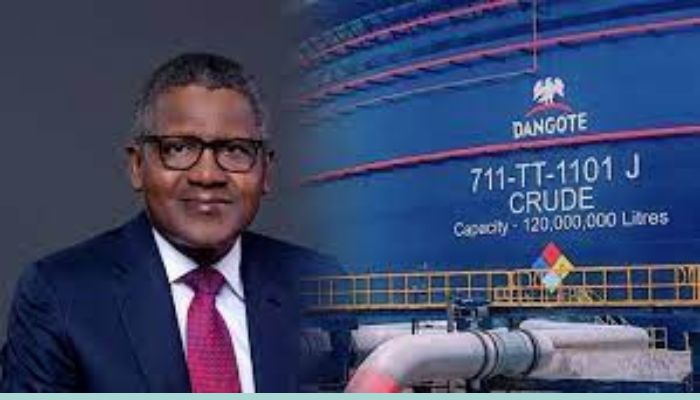
The Dangote Group’s formal application to the Securities and Exchange Commission (SEC) for the Initial Public Offering (IPO) of its 650,000 barrels-per-day refinery is widely celebrated as a historic corporate milestone. However, a structural review of the capital markets data reveals this is not merely a stock listing; it is a massive liquidity injection designed to fundamentally rebalance Africa’s energy and financial equations.
By converting physical petroleum infrastructure into tradable financial equity, the Dangote Refinery IPO is mathematically engineered to unlock trapped capital, restructure multibillion-dollar debt, and instantly expand the market capitalization of the Nigerian Exchange (NGX). Here is a data-driven breakdown of the numbers driving the continent’s largest public offering.
The Valuation Matrix: Rewriting Africa’s IPO League Table
To contextualize the scale of this filing, one must map it against historical African IPO data. Market analysts project the Dangote Refinery could seek a valuation between $10 billion and $15 billion. If achieved, this single listing will instantly dwarf previous record-setting offerings on the continent.
Historically, African mega-IPOs have been concentrated in the telecommunications and banking sectors. A hydrocarbon infrastructure play of this magnitude introduces a new asset class to the continent’s bourses, forcing institutional investors to recalibrate their portfolio weights.
Source: Market estimates & historical exchange data. Hover to interact.
The NGX Multiplier: A Market Cap Expansion Event
From a macroeconomic perspective, the IPO acts as a sudden multiplier on the Nigerian Exchange. The NGX currently operates with a total market capitalization hovering around $40 billion to $45 billion. Introducing a $10 billion–$15 billion asset into this pool mathematically expands the market’s depth by 20% to 30% overnight.
This expansion is not just numerical; it alters the liquidity matrix. A listing of this magnitude absorbs massive domestic and foreign capital, potentially drawing in pension funds and global emerging market investors who previously bypassed the NGX due to a lack of sufficiently large, liquid single equities.
Hover over the bars to view the pre- and post-IPO market depth.
- Estimated Valuation Target: $10bn – $15bn
- Refinery Capacity: 650,000 bpd
- Estimated Project Debt: $2.5bn – $3bn (Afreximbank, others)
- NGX Market Cap Expansion: ~20% – 30% Instantaneous
- Foreign Capital Inflow Potential: Hundreds of millions in FX liquidity
The Debt-to-Equity Arbitrage: Why Now?
The timing of the SEC filing is a calculated financial arbitrage. Constructing the refinery required massive capital injections, much of it sourced through syndicated loans and commercial debt carrying significant interest burdens—often in double digits. The facility reportedly carries a debt profile of over $2.5 billion.
By going public, the company is executing a classic deleveraging maneuver. The proceeds from the IPO will be used to pay down or refinance this expensive construction debt. The mathematical result is a dramatic reduction in finance costs, instantly improving the company’s bottom-line profitability and freeing up cash flows for dividend distributions to new shareholders.
Hover over the areas to view the projected shift from debt to equity financing.
The Output Monetization: 650,000 bpd as a Revenue Stream
Ultimately, the valuation of this IPO is underpinned by a single, powerful metric: 650,000 barrels per day. At current global refining margins, a fully operational facility at this capacity generates billions of dollars in annual revenue. By filing with the SEC, Dangote is opening the books, allowing the market to price the equity based on the daily flow of refined petroleum products.
As the SEC begins its regulatory review, the data suggests a market hungry for exposure to Africa’s largest industrial complex. If the pricing math aligns with investor expectations, this IPO will not just set a record; it will recalibrate the financial gravity of the African continent.