By Hussaini Umar
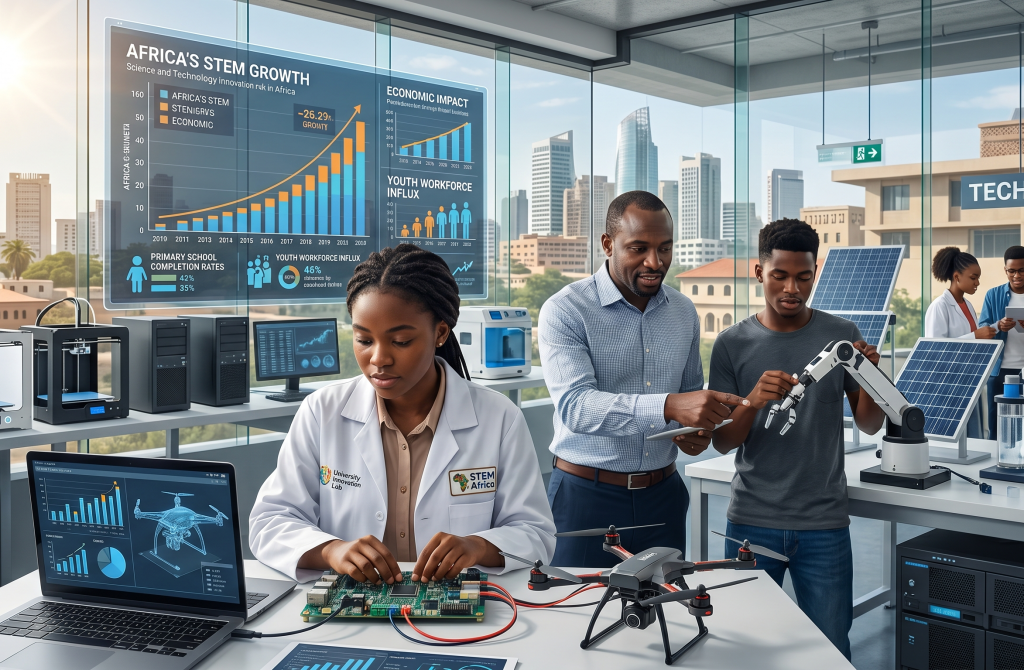
For over a decade, a narrative of robust economic expansion has echoed across the African continent. Driven by structural reforms and prudent macroeconomic management, the continent has maintained a remarkable average economic growth rate of 4.5% per year. Yet, for data journalists and policy analysts tracking these figures on the ground, a persistent paradox remains: this macroeconomic triumph has not yet triggered a proportional, systemic decline in poverty, nor has it radically transformed the daily living conditions of the average African.
The data indicates that Africa’s growth model is reaching a critical inflection point. As massive new deposits of oil, gas, and critical minerals are continuously discovered across the continent, the traditional extractivist model is facing diminishing returns in terms of human development. The core challenge of our era is no longer just the efficient extraction and marketing of these resources; it is the strategic redirection of the resulting revenues into the vital organs of sustainable development—specifically, high-quality, future-proof education and resilient healthcare systems.
THE AFRICAN PARADOX +-------------------------------------------------+ | Macroeconomic Growth: ~4.5% Annual GDP Rise | +-------------------------------------------------+ │ ▼ (The Disconnect) +-------------------------------------------------+ | Lagging Indicators: High Poverty, Low Quality | | of Life, Raw Resource Export Reliance | +-------------------------------------------------+ │ ▼ (The Structural Fix) +-------------------------------------------------+ | Strategic Pivot: Reinvesting Resource Revenue | | Directly into STEM Higher Education & Capacity | +-------------------------------------------------+As science journalists, we must look beyond the surface level of GDP charts to examine the structural imbalances holding the continent back. Chief among these is a profound mismatch within Africa’s higher education systems. If Africa is to navigate unprecedented urbanisation, mitigate a climate crisis it did not cause, and secure its food supply, it must fundamentally overhaul what its universities teach. The ultimate engine for Africa’s transformation is not buried in its soil; it is cultivated in its classrooms through Science, Technology, Engineering, and Mathematics (STEM).
The Convergence of Compounding Challenges
African policymakers are currently grappling with three overlapping, systemic pressures that demand highly technical, data-driven solutions:
1. Rapid Urbanization and Agricultural Strain
The acceleration of rural-to-urban migration is reshaping the demographic landscape of the continent. Governments are under immense pressure to manage unprecedented urban density, which requires sophisticated civil engineering, smart infrastructure, and massive housing deployments.
Concurrently, cities must be fed. This requires a drastic increase in agricultural productivity through agrotech and modernised irrigation, all while ensuring robust food security frameworks remain intact for rural populations.
2. The Asymmetric Climate Burden
On the environmental front, Africa is disproportionately bearing the brunt of global climate change—a phenomenon for which the continent bears virtually no historical responsibility. Data from across sub-Saharan Africa reveals an escalating cycle of costly climate shocks:
- Prolonged, severe droughts drying up traditional arable land.
- Sudden, catastrophic flash floods destroying critical infrastructure.
- Rising sea levels threatening coastal economic hubs.
To mitigate these shocks, Africa cannot rely solely on imported technology. The continent requires homegrown scientific research in climatology, ecological engineering, and sustainable water management.
3. The Opportunity in Scientific Collaboration
These compounding crises present a unique paradox: they double as profound opportunities for pioneering scientific research. Global breakthroughs in medicine, biodiversity conservation, precision irrigation, and green mining can, and should, be co-developed by African researchers working alongside international networks. However, these alliances will remain out of reach unless Africa corrects a long-standing structural deficit in its educational pipeline.
Decoding the STEM Deficit
The primary barrier to Africa’s self-reliance is not a lack of talent or ambition, but a historic imbalance in academic enrolment. Currently, the vast majority of African university graduates hold degrees in the literary and social sciences.
According to regional educational data, students enrolled in Science, Technology, Engineering, and Mathematics (STEM) disciplines represent, on average, only 25% of the entire higher education cohort.
Compounding this deficit is a stark gender disparity, with women significantly under-represented across almost all technical faculties.
AFRICAN HIGHER EDUCATION ENROLLMENT SPLIT =========================================== 75% Literary & Social Sciences =========================================== ============ 25% STEM Fields ============This structural deficit exists precisely at the moment primary and secondary school completion rates are surging across the continent. Thanks to aggressive schooling access campaigns over the past two decades, a historic wave of youth is finishing secondary education. The critical policy question is: What skills will they find when they arrive at the tertiary level?
If they are not equipped with modern technical capabilities, Africa risks turning its demographic dividend into a destabilising unemployment crisis. Recognising this urgency, an international coalition—including regional governments and the World Bank convened a High-Level Forum on Higher Education for Science, Technology, and Innovation in Kigali, Rwanda. The forum issued a clear call to action: orchestrate systemic, well-funded reforms to aggressively expand and double the proportion of scientific and technical graduates emerging from African universities.
A Blueprint for 21st-Century Academic Partnerships
To transform higher education into an engine for economic modernisation, African nations must abandon isolated academic models in favour of dynamic, multi-layered partnerships. Successful implementations across the continent highlight three critical cooperative pathways:
Cross-Border Academic Alliances
African universities must actively engage with premier international counterparts to build collaborative research networks. A prime example is the University of Michigan’s STEM-Africa initiative, which systematically supports early-career African scientists, fosters joint research networks, and accelerates the training of advanced mathematicians and medical doctors on African soil.
Furthermore, global “frontier universities” are beginning to recognise Africa as a vital growth market for education. Prestigious American and European institutions—which previously established branches in Asia and the Middle East—are now building physical campuses in Africa. In Rwanda, for instance, world-class international campus models are intentionally tailoring their curricula to align with local cultural norms and regional market needs, producing highly specialised graduates without forcing them into the brain-drain pipeline.
Deep Integration with the Private Sector
Higher education must align with the practical realities of the contemporary labor market. Following successful frameworks established in Kenya and Senegal, ministries of higher education are shifting away from purely bureaucratic oversight by opening university governing boards to private sector executives and industrial leaders.
| Country | Mechanism | Operational Impact |
| Kenya | Industrial Advisory Boards | Direct private sector input into curriculum design; mandatory co-op and tech internships. |
| Senegal | Public-Private Institutional Governance | Alignment of engineering faculties with national infrastructure, mining, and energy projects. |
This integration ensures that curricula evolve in tandem with employer expectations, while simultaneously unlocking corporate funding, apprenticeships, and direct pipelines to employment for young graduates.
South-South Knowledge Exchanges
Africa’s newer economic partners—specifically Brazil, China, India, and South Korea—offer valuable blueprints for rapid economic transition. Over the past half-century, these nations successfully designed targeted higher education programmes that served as the primary drivers for modernising their own economies.
Through platforms like the Partnership for Applied Science, Engineering, and Technology (PASET) facilitated by the World Bank, African decision-makers are partnering directly with these emerging economies. PASET aims to rapidly transfer pedagogical strategies, technical expertise, and operational insights to African institutions, particularly in high-potential sectors like digital tech, renewable energy, and advanced manufacturing.
Scaling Regional Excellence: The Centers of Excellence Model
When local resources are constrained, centralisation and specialisation become essential strategies. To prevent the dilution of scarce educational funding across too many under-equipped faculties, the World Bank, in collaboration with the Association of African Universities and eight African nations, launched a targeted initiative: the creation of 19 specialised “centres of excellence” across West and Central Africa.
THE REGIONAL CENTERS OF EXCELLENCE PARADIGM [ Pooled Resources / International Funding ] │ ▼ ┌───────────────────────────────────┐ │ 19 Specialized Hubs in W/C Africa │ └───────────────────────────────────┘ ▲ ▲ ▲ │ │ │ ┌────────┴────┐ ┌──────┴──────┐ ┌────┴────────┐ │ High-End │ │ Top Regional│ │ Cross- │ │ Labs/Tech │ │ Faculty │ │ Border │ │ │ │ │ │ Knowledge │ └─────────────┘ └─────────────┘ └─────────────┘This model concentrates infrastructure, premium lab equipment, and top-tier regional faculty into designated, highly focused hubs. Instead of nineteen universities building subpar data science or biotechnology labs, a single, world-class hub serves the entire region. This approach maximises the impact of limited funding, drives regional knowledge sharing, and fosters deeper economic integration across national borders.
The 11-Million-Youth Imperative
The data surrounding Africa’s demographic outlook reveals the sheer scale of the challenge ahead: over the next decade, more than 11 million young Africans will enter the labour market every single year.
ANNUAL LABOR MARKET INFLUX (NEXT 10 YEARS) ================───────────────────────── 11M+ Young Africans Entering the Workforce Annually ================─────────────────────────This statistic represents either an unprecedented economic engine or a profound systemic risk. Leaving the next generation unequipped with the tools of modern science and technology is a luxury the continent cannot afford.
If local and international enterprises operating in Africa are to scale, position themselves competitively within global markets, and drive internal innovation, they must be able to recruit world-class technical talent locally. Strategic, highly coordinated investments in STEM higher education are no longer just an alternative educational policy—they are an absolute macroeconomic necessity. By transforming its educational models today, Africa can ensure that the young people driving its future are fully equipped to build it.